Cataract Surgery
RestoringClearer Vision.
Cataracts are one of the most common causes of blurred vision, especially with aging. Modern cataract surgery is a safe and effective procedure that replaces the cloudy natural lens with a clear artificial lens, helping restore sharper vision and improve quality of life.
Understanding Cataracts
What Is aCataract?
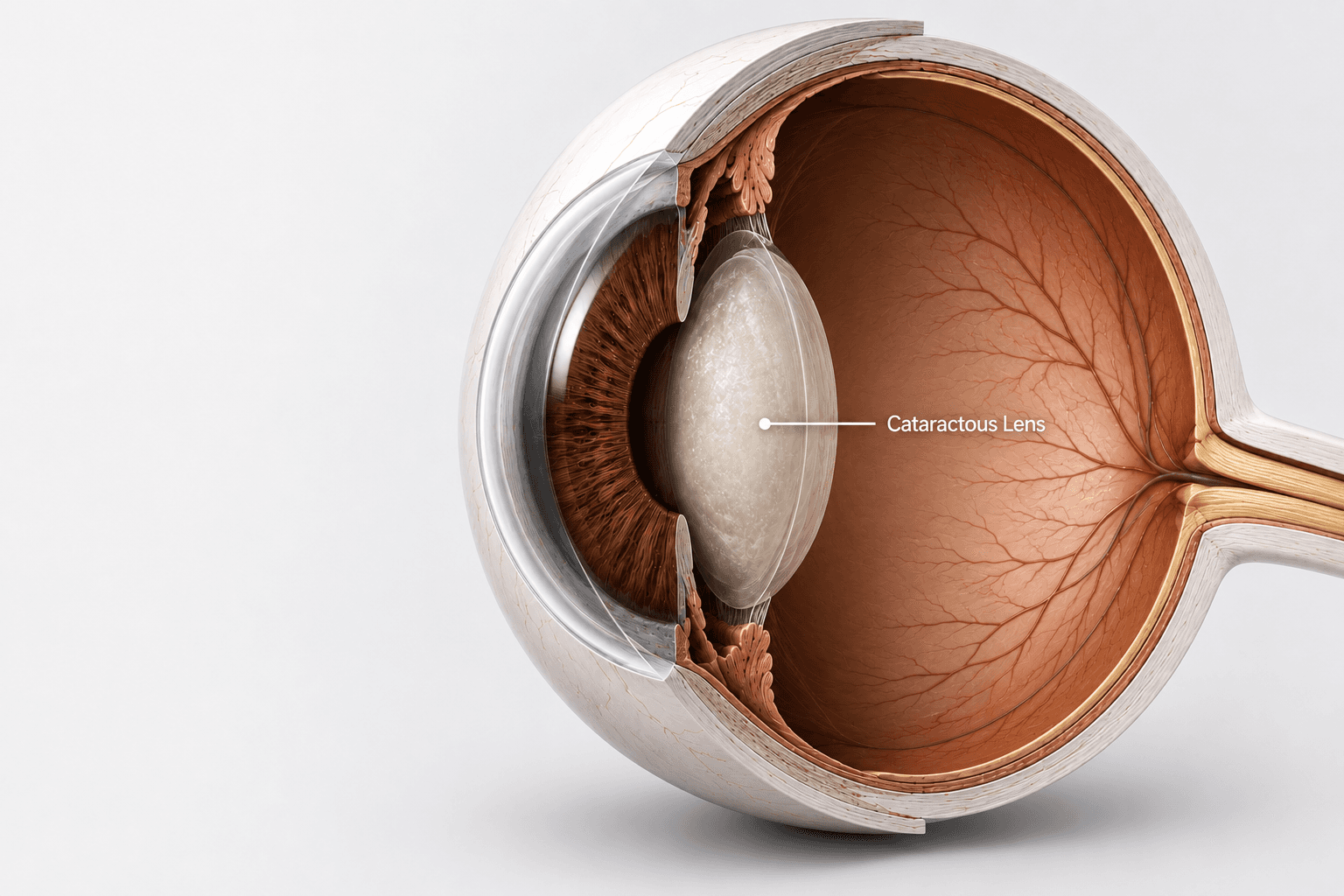
A cataract is the gradual clouding of the eye's natural lens, causing vision to become blurred, dim, or less vibrant. Although most cataracts develop with aging, they can also occur because of diabetes, trauma, medications, or be present from birth.
Age-Related
The most common type, developing gradually as the eye's natural lens ages.
Diabetic
People with diabetes may develop cataracts earlier or experience faster progression.
Traumatic
Cataracts can develop after an eye injury, immediately or even years later.
Congenital
Some children are born with cataracts or develop them during early childhood.
Common Symptoms
When Is It Time fora Cataract Evaluation?
Cataracts usually develop gradually, and many people do not notice the changes right away. If these symptoms begin affecting your daily activities, a comprehensive eye examination can help determine whether cataracts are the cause.
Blurred or Cloudy Vision
Vision gradually becomes hazy, making reading, driving, and recognizing faces more difficult.
Difficulty Seeing at Night
Reduced contrast and poor night vision can make evening driving and dimly lit environments challenging.
Glare & Halos Around Lights
Bright sunlight or oncoming headlights may produce glare or halos that interfere with clear vision.
Colors Appear Faded
The cloudy lens filters incoming light, causing colors to appear dull, yellowed, or less vibrant.
Frequent Glasses Changes
Your prescription may seem to change often, but new glasses provide only temporary improvement.
Double Vision in One Eye
Some cataracts cause ghosting or double vision even when only one eye is open.
Cataract Surgery
Safe. Precise.Personalized.
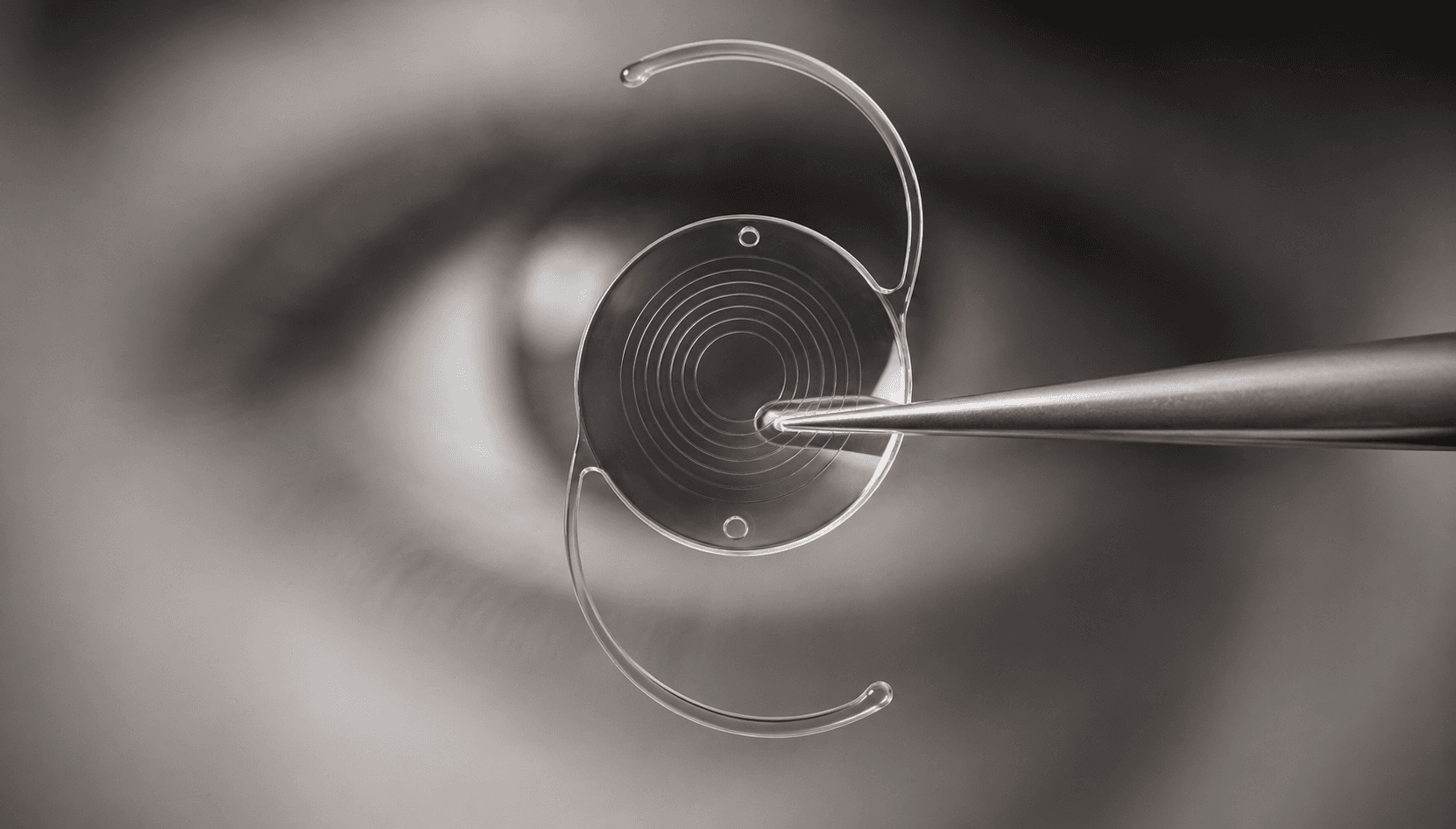
Modern cataract surgery is one of the safest and most successful procedures performed today. The cloudy natural lens is removed through a tiny incision and replaced with a clear artificial intraocular lens (IOL), helping restore clearer vision and improve quality of life.
Comprehensive Evaluation
Every patient undergoes a detailed eye examination and precise measurements to determine the most appropriate surgical plan.
Modern Phacoemulsification
A tiny incision allows the cloudy lens to be gently removed using ultrasound technology before a clear intraocular lens is implanted.
Personalized Lens Options
We discuss intraocular lens choices based on your lifestyle, visual needs, and long-term goals.
Dedicated Follow-up Care
Regular postoperative visits help ensure proper healing and the best possible visual outcome.
Recovery & Results
What to ExpectAfter Surgery
Recovery after cataract surgery is usually smooth. While healing varies from person to person, most patients experience gradual improvement in vision over the days and weeks following surgery.
Same-Day Procedure
Cataract surgery is typically performed as an outpatient procedure, allowing most patients to return home the same day.
Rapid Visual Recovery
Many patients notice clearer vision within the first few days, with continued improvement as the eye heals.
Follow-Up Visits
Scheduled postoperative appointments allow us to monitor healing and ensure the best possible visual outcome.
Excellent Success Rate
Modern cataract surgery is among the safest and most successful procedures performed today when appropriately indicated.
Take the Next Step
Ready to SeeMore Clearly?
If cataracts are affecting your daily activities, we are here to help. Schedule a consultation to discuss your symptoms, evaluate your vision, and explore the treatment options best suited to your lifestyle.
After Cataract Surgery
Vision GettingCloudy Again?
Some patients notice that their vision becomes blurry months or even years after successful cataract surgery. This does not mean the cataract has returned.
Posterior CapsularOpacification (PCO)
During cataract surgery, your cloudy natural lens is removed and replaced with a clear artificial lens called an intraocular lens (IOL).
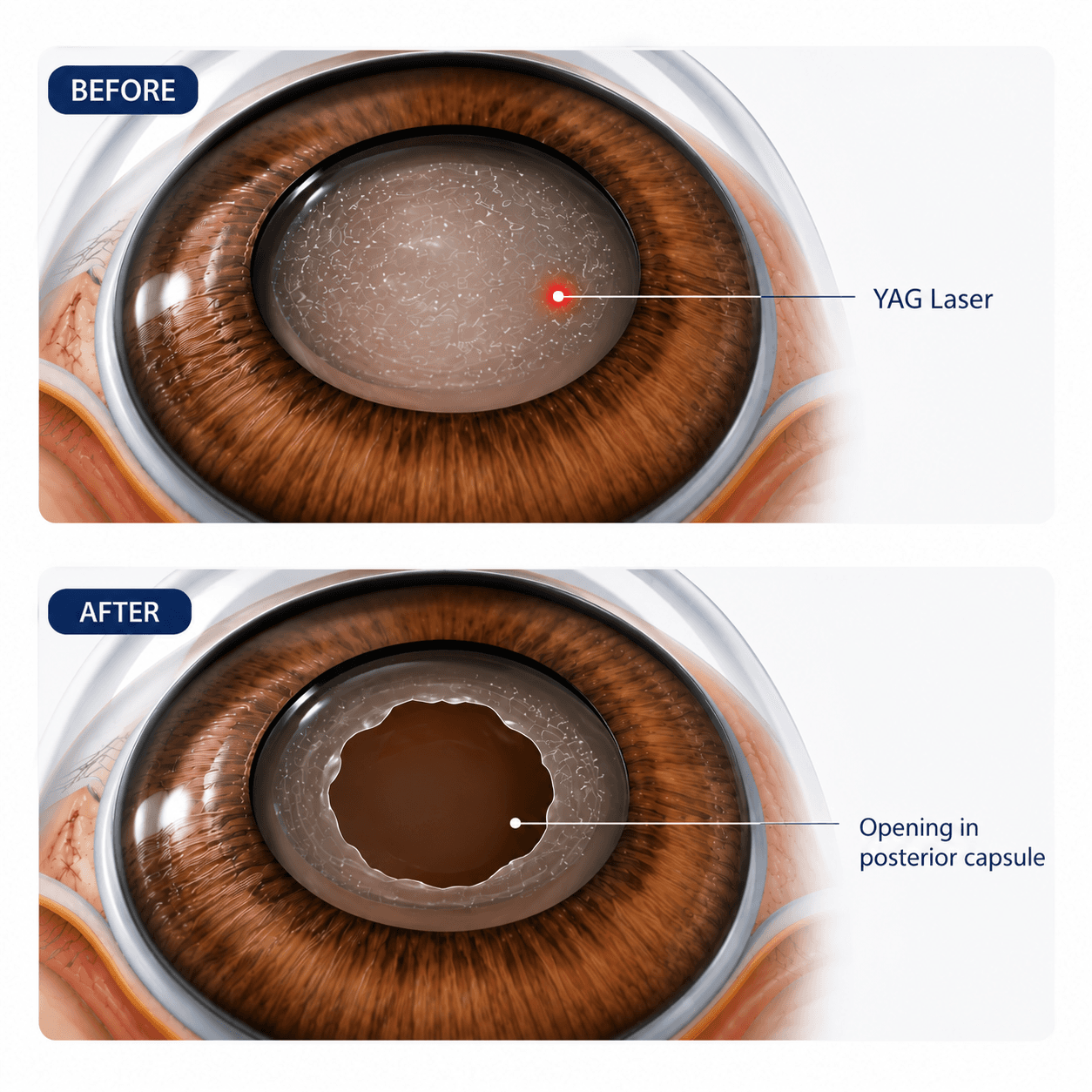
The artificial lens sits inside a thin transparent membrane called the posterior capsule. Over time, this capsule may become cloudy, causing blurry vision that can feel similar to the symptoms of a cataract.
Fortunately, this common condition is usually treated with a quick, painless outpatient laser procedure called a YAG laser capsulotomy. Most patients notice clearer vision within one or two days.
The Cataract Has Not Returned
During cataract surgery, the cloudy natural lens is permanently removed. It cannot grow back. Instead, the thin membrane that supports your artificial lens has become cloudy.
Quick Outpatient Laser
A YAG laser capsulotomy is performed in the clinic and usually takes only a few minutes. No incision, stitches, or operating room are required.
Clearer Vision Again
Most patients notice clearer vision within a day or two after treatment and can return to their normal activities shortly afterward.
Good to Know
Posterior capsular opacification (PCO) is one of the most common long-term changes after cataract surgery. Although not everyone develops it, it is a routine part of cataract care and can usually be treated safely and effectively with a YAG laser capsulotomy performed in the clinic.
Related Services
You May AlsoBe Interested In
Explore other services designed to help protect, restore, and preserve your vision.
Book a Consultation
Your vision deserves
expert care.
Whether you're considering LASIK, cataract surgery, evaluation for an eye tumor, or a comprehensive eye examination, we're here to help you see your best.