iDRDREI

Eye Health

Glaucoma

Glaucoma can slowly damage the nerve that connects your eye to your brain. Learn what glaucoma is, how it can affect your vision, and how treatment can help protect your sight.

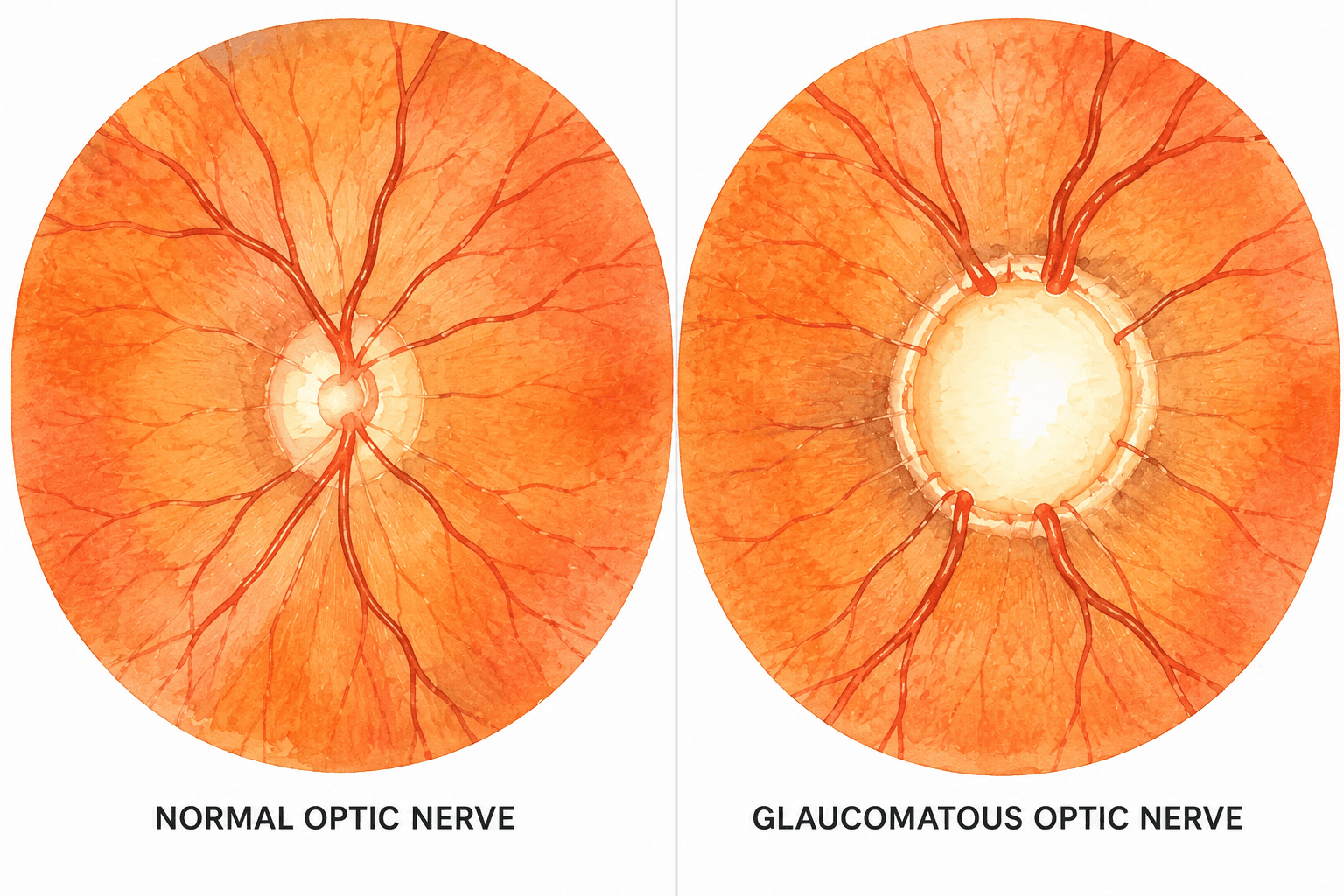
Glaucoma and the optic nerve
Healthy and glaucomatous optic nerve

Understanding Glaucoma

What is glaucoma?

Glaucoma is a group of eye diseases that can damage the optic nerve — the nerve that carries information from your eye to your brain.

In many people, glaucoma develops slowly. You may not notice any changes in your vision until the disease has already caused damage.

The important thing to know

Glaucoma damage is usually permanent, but early detection and treatment can help slow or prevent further vision loss.

Types of Glaucoma

Not all glaucoma is the same.

Glaucoma can develop in different ways. Here are three important types to know.

01

Open-Angle Glaucoma

The silent one

This is the most common type of glaucoma. It usually develops slowly, and you may not notice anything is wrong with your vision at first.

Usually painless

Often develops gradually

Vision loss can begin in the side vision

02

Angle-Closure Glaucoma

The one that can happen suddenly

The drainage area of the eye becomes blocked, causing eye pressure to rise quickly. When this happens suddenly, it is an emergency.

May cause severe eye pain

Red eye and blurred vision

Halos around lights, headache, nausea, or vomiting

03

Normal-Tension Glaucoma

Glaucoma without high pressure

The optic nerve can become damaged even when the eye pressure is within the normal range.

Eye pressure may look normal

Often develops slowly

Regular optic nerve checks are important

Eye pressure is only part of the picture. Your optic nerve, visual field, and other test results all help your eye doctor determine whether glaucoma is present.
Symptoms

Glaucoma can be hard to notice.

One of the most important things to know about glaucoma is that it often causes no symptoms in the early stages.

Early glaucoma

You may see normally and feel completely fine. There may be no pain, redness, or obvious change in your vision.

This is why regular eye examinations are so important.

As glaucoma progresses

Vision loss usually begins at the edges of your vision and can gradually become more noticeable.

  • Difficulty noticing things in your side vision
  • Bumping into objects more often
  • Difficulty navigating in unfamiliar places
  • In advanced cases, severe loss of vision

Sudden eye pain or vision changes?

Severe eye pain, a red eye, blurred vision, halos around lights, headache, nausea, or vomiting can be signs of acute angle-closure glaucoma.

This requires urgent attention. Seek ophthalmologic consultation.

Diagnosis

How do we find glaucoma?

Glaucoma is not diagnosed with just one test. Your eye doctor looks at your eye pressure, optic nerve, vision, and other findings together.

Eye Pressure

Measures the pressure inside your eye. High pressure can increase the risk of glaucoma, but glaucoma can also occur with normal eye pressure.

Optic Nerve Exam

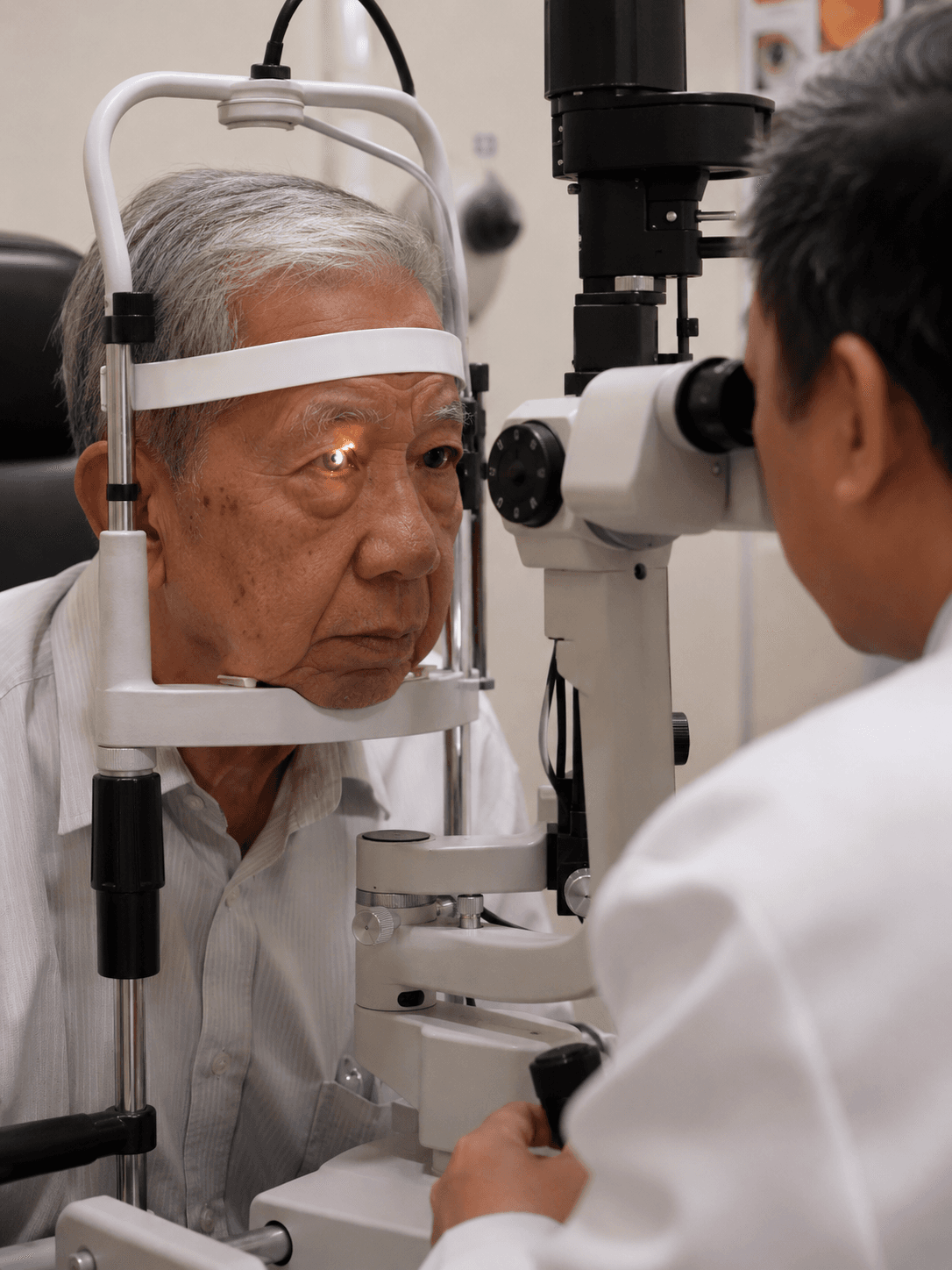
Your doctor examines the optic nerve for changes that may suggest glaucoma.

OCT Scan

A painless scan that creates detailed images of the optic nerve and the layers of the retina.

Visual Field Test

Checks your side vision to see whether glaucoma has affected your field of vision.

Gonioscopy

A special examination that allows your doctor to look at the drainage area of the eye.

Why do I need several tests?

Glaucoma can look different from person to person. Using several tests helps your doctor determine whether the optic nerve is healthy, whether glaucoma is present, and whether it is changing over time.

Treatment

How is glaucoma treated?

Treatment focuses on lowering the pressure in the eye when needed and protecting the optic nerve from further damage.

The goal is to protect your vision.

Glaucoma damage that has already occurred usually cannot be reversed. However, appropriate treatment can slow or prevent further damage and help preserve the vision you still have.

Eye Drops

The most common first treatment. Eye drops help lower the pressure inside the eye and protect the optic nerve.

Laser Treatment

Laser can help improve the flow of fluid out of the eye or reduce the amount of fluid produced, depending on the type of glaucoma.

Glaucoma Surgery

If eye drops or laser treatment are not enough, surgery may be recommended to create a better pathway for fluid to leave the eye.

Treatment is often long-term

Glaucoma usually requires regular check-ups. Your doctor will monitor your eye pressure, optic nerve, and vision to make sure your treatment is working.

Treatment can change over time

Some people need only one treatment, while others may need a combination of eye drops, laser, or surgery. Your treatment plan is tailored to your eyes.

Frequently Asked Questions

Glaucoma questions, answered.

Simple answers to some of the questions patients commonly ask about glaucoma.

Yes, glaucoma is the leading cause of permanent blindness. It can cause permanent vision loss if it is not detected or treated. The good news is that early detection and proper treatment can help slow or prevent further damage.

Yes. Some people develop glaucoma even when their eye pressure is within the normal range. This is why your doctor also looks at your optic nerve, visual field, and other test results.

Not always. Early glaucoma often has no symptoms. You may see normally and feel completely fine even while damage is occurring. Regular eye examinations are important for detecting glaucoma early.

There is currently no way to reverse damage that has already occurred. However, treatment can slow or prevent further damage and help protect the vision you still have.

Not necessarily. Some people need long-term eye drops, while others may be treated with laser or surgery. Your treatment depends on the type and severity of your glaucoma and how your eyes respond to treatment.

Glaucoma can run in families. Having a close relative with glaucoma can increase your risk, so regular eye examinations are especially important if glaucoma runs in your family.

The right schedule depends on your age, family history, eye pressure, and other risk factors. If you already have glaucoma, your doctor will recommend how often you should return based on your condition.

Book a Consultation

Your vision deserves
expert care.

Whether you're considering LASIK, cataract surgery, evaluation for an eye tumor, or a comprehensive eye examination, we're here to help you see your best.