Education
Children's
Eye Health
A parent's guide to healthy vision in the digital age — from screen time and myopia to the everyday habits that help protect growing eyes.
20–20–20
A simple habit for
healthier screen use
Why It Matters
Growing eyes need
special attention.
Children see the world differently as their eyes and visual systems develop. Understanding how everyday habits affect their vision can help parents make better choices early.
Vision Development
A child’s visual system continues to develop throughout childhood. Clear vision in both eyes is important for normal visual development and learning.
Digital Screens
Phones, tablets, computers, and gaming devices are now part of everyday life. Prolonged close-up viewing can contribute to eye fatigue and discomfort.
Myopia
Nearsightedness is becoming increasingly common in children. Healthy visual habits and regular eye examinations can help identify problems early.
Screens & Your Child's Eyes
Can screens
damage their eyes?
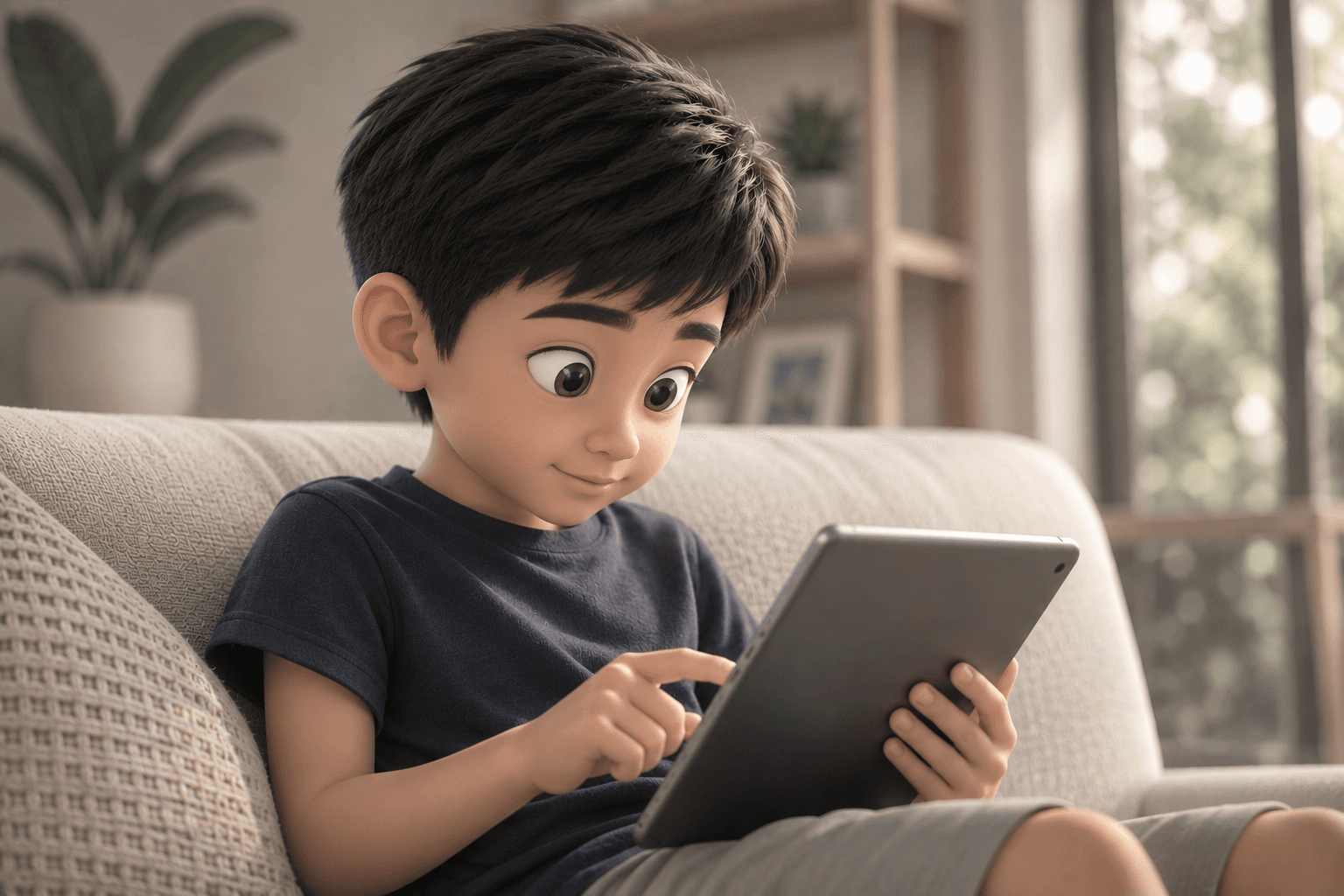
Screens are now part of everyday childhood. The good news is that simply looking at a phone, tablet, or computer does not mean your child's eyes are being permanently damaged.
However, spending long periods focusing on nearby screens can lead to eye fatigue and discomfort. More importantly, children may spend less time outdoors and more time doing prolonged close-up activities—habits that may contribute to the development and progression of myopia.
Common effects of prolonged screen use
Eye fatigue
Dry or irritated eyes
Headaches
Blurred vision
Difficulty shifting focus
Reduced blinking
The bigger picture: It's not just the screen. Near work, breaks, outdoor time, viewing distance, and overall visual habits all matter.
A Simple Habit
Remember the
20–20–20 rule.
Every 20 minutes of screen time or other close-up work, look at something about 20 feet away for at least 20 seconds.
20
MINUTES
20
FEET AWAY
20
SECONDS
Parent tip: Set a timer or use natural breaks in homework, gaming, or screen-based activities to remind your child to look away.
Myopia
More children are
becoming nearsighted.
Myopia is increasingly common in children. Understanding the condition and recognizing it early can help protect your child's vision as their eyes continue to develop.
What is Myopia?
Nearsightedness causes distant objects to appear blurry while nearby objects remain clearer.
Myopia commonly begins during childhood and may progress as the eyes continue to grow. Early detection allows vision to be monitored and management options to be considered.
What to Look For
Squinting, sitting close to screens, or difficulty seeing the board can be early clues.
Other signs include holding books or screens unusually close, frequent headaches, eye fatigue, or difficulty recognizing objects from a distance.
Why It Matters
Higher levels of myopia are associated with greater lifetime risks to eye health.
Identifying myopia early allows your child's vision to be monitored and appropriate myopia management strategies to be discussed when needed.
Time Outdoors
Make outdoor time
part of the routine.
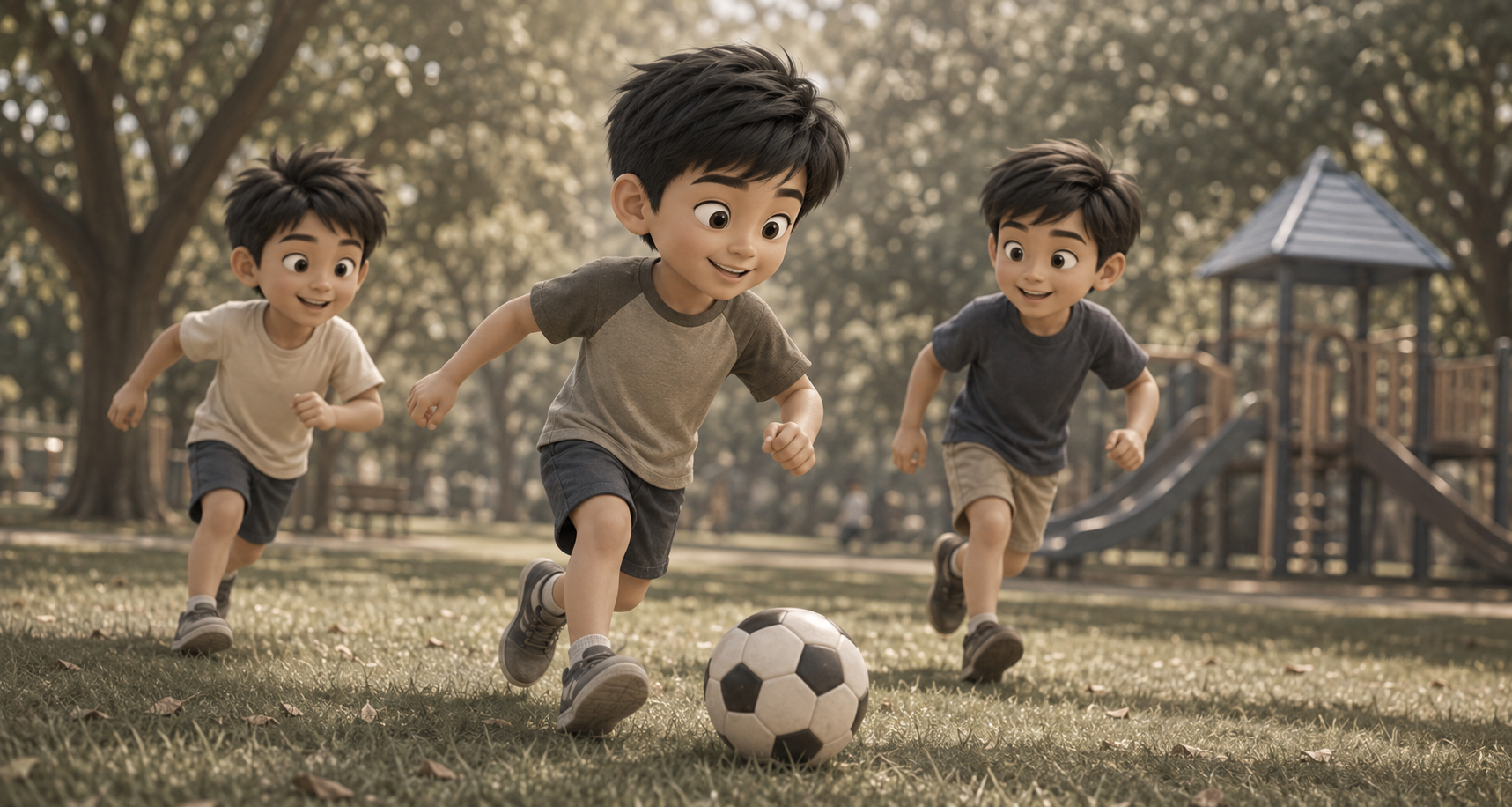
Regular outdoor time is associated with a lower risk of developing myopia in children. It also gives growing eyes a break from prolonged close-up activities.
Play
Encourage active outdoor play rather than spending every free moment indoors with a screen.
Explore
Walking, cycling, playgrounds, and simply exploring outside all provide opportunities to spend time outdoors.
Balance
The goal isn't to eliminate screens. Balance screen-based activities with outdoor time and other activities.
Eye Examinations
When should your
child have an eye exam?
Children don't always know that the way they see isn't normal. An eye examination can identify problems before they begin affecting school, development, or everyday life.
Infancy
Early assessment
An eye examination may be recommended when there are concerns about eye alignment, eye appearance, visual behavior, or a family history of significant eye problems.
Preschool
Before starting school
A vision assessment can help identify problems that may interfere with learning, including significant refractive errors, amblyopia, or eye alignment problems.
School Age
Regular monitoring
Children's vision can change as they grow. Regular eye examinations are especially important when there is a history of myopia or other vision concerns.
Any Age
When something changes
Don't wait for the next routine visit if your child develops a noticeable change in vision, eye alignment, eye appearance, or visual behavior.
A school vision screening is helpful, but it isn't the same as a comprehensive eye examination. If you have concerns about your child's vision, an eye examination can provide a more complete assessment.
Warning Signs
Signs parents
shouldn't ignore.
Children may not always be able to explain that they are having trouble seeing. Changes in their behavior can sometimes be the first clue that something needs attention.
Common signs
Squinting
Your child frequently squints or partially closes one eye to see more clearly.
Sitting too close
Your child consistently sits very close to the television, tablet, or computer.
Covering one eye
Your child covers or closes one eye when reading, watching television, or looking at distant objects.
Eye turning
One eye appears to turn inward, outward, upward, or downward.
Headaches
Frequent headaches or eye discomfort occur after reading or other close-up activities.
Difficulty seeing
Your child has trouble seeing the board, recognizing faces from a distance, or keeping up visually at school.
Important signs
White pupil
A white or unusual reflection in one pupil, particularly when it repeatedly appears in photographs, should be evaluated promptly.
Sudden changes
A sudden change in vision, eye alignment, eye appearance, or visual behavior should not be ignored.
Healthy Habits
Simple habits can
support healthy vision.
Good visual habits begin early. Small changes to your child's daily routine can help reduce prolonged eye strain and encourage healthier screen and near-work habits.
Follow the 20–20–20 rule
During prolonged screen use or close-up work, encourage your child to look about 20 feet away for at least 20 seconds every 20 minutes.
Spend time outdoors
Regular outdoor time is associated with a lower risk of developing myopia and provides a natural break from close-up activities.
Keep screens at a comfortable distance
Encourage children to avoid holding phones, tablets, or books too close to their face.
Get regular eye examinations
Routine eye examinations can detect vision problems that children may not recognize or be able to describe themselves.
The goal isn't to eliminate screens. Screens are an important part of school, communication, and everyday life. The goal is to help children develop balanced habits around screen use, near work, outdoor activity, and regular eye care.
Frequently Asked Questions
Children's eye health,
answered.
Answers to some of the questions parents commonly ask about screens, myopia, eye examinations, and healthy vision habits.
Does screen time damage children's eyes?
+
Using phones, tablets, computers, or gaming devices does not automatically damage a child's eyes. However, prolonged close-up screen use can contribute to eye fatigue, dryness, headaches, and difficulty shifting focus. Children should take regular breaks and balance screen-based activities with outdoor time and other activities.
How much screen time should my child have?
+
There is no single screen-time limit that is appropriate for every child. Age, developmental needs, schoolwork, sleep, physical activity, and the type of screen use all matter. The goal should be a healthy balance that includes adequate sleep, physical activity, outdoor time, and regular breaks from close-up activities.
What is the 20-20-20 rule?
+
The 20-20-20 rule is a simple way to reduce eye fatigue during prolonged near work. Every 20 minutes, encourage your child to look at something about 20 feet away for at least 20 seconds.
Can screen time cause myopia?
+
Myopia is multifactorial. Genetics, environmental factors, outdoor exposure, and near-work habits can all play a role. Screen use itself should not be considered the sole cause of myopia, but prolonged close-up activities and reduced time outdoors may contribute to myopia risk.
Does outdoor time help prevent myopia?
+
Regular outdoor time is associated with a lower risk of developing myopia in children. Encouraging outdoor play is a healthy habit for many reasons and can also help balance the amount of time children spend doing close-up activities.
How do I know if my child needs glasses?
+
Children may need glasses if they have difficulty seeing distant objects, squint frequently, sit very close to the television, hold books or screens unusually close, or have difficulty seeing the board at school. Some children may have significant vision problems without obvious symptoms, which is why appropriate eye examinations are important.
When should my child have an eye examination?
+
The appropriate timing depends on your child's age, symptoms, family history, and previous eye findings. Children should be evaluated when there are concerns about vision, eye alignment, or eye appearance. Regular examinations are particularly important for children with known refractive errors or a history of eye problems.
Is a school vision screening the same as an eye examination?
+
No. A school vision screening is designed to identify children who may have difficulty seeing and who may need further evaluation. A comprehensive eye examination is more detailed and can assess vision, refraction, eye alignment, eye health, and other aspects of visual development.
What are signs that my child may have an eye problem?
+
Warning signs include frequent squinting, covering one eye, sitting very close to screens or the television, difficulty seeing the board, headaches after reading, an eye that turns in or out, or a noticeable change in vision or eye appearance. A white or unusual reflection in the pupil, particularly in photographs, should be evaluated promptly.
My child has a white reflection in one pupil in photographs. Should I be concerned?
+
A white pupil reflection can have several causes, including some that require prompt evaluation. If you repeatedly notice a white or abnormal reflection in one eye, particularly when the other eye has a normal red reflection, your child should have an eye examination promptly.
Book a Consultation
Your vision deserves
expert care.
Whether you're considering LASIK, cataract surgery, evaluation for an eye tumor, or a comprehensive eye examination, we're here to help you see your best.